
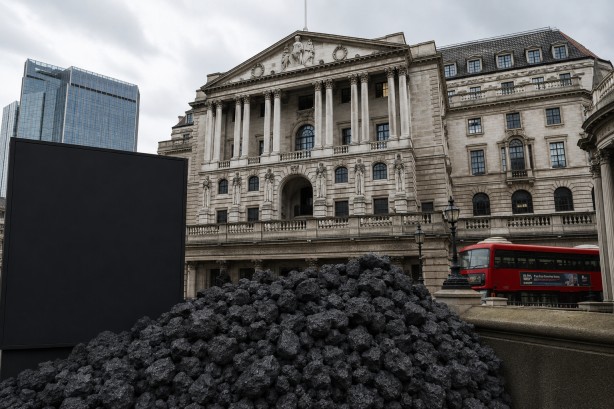
In a decisive move to address climate-related financial risks, the Bank of England has declared that from October, it will cease accepting bonds tied to thermal coal companies as collateral for its lending operations. This measure is seen as a significant shift in the financial landscape as the world heads towards cleaner energy solutions and aims for net-zero emissions.
Bonds, which commercial banks use as collateral to borrow from the central bank for daily operations and transactions, will no longer qualify if linked to the thermal coal sector. This fossil fuel, primarily used in power plants for electricity generation, is now increasingly viewed as a financial liability. The central bank highlighted that companies involved in thermal coal are facing mounting risks as global efforts to transition to greener energy intensify, potentially leading to a devaluation of coal-related assets over time.
Moreover, the Bank of England’s policy includes the option to impose discounts on bonds from other sectors susceptible to climate risks. This strategy is designed to shield the central bank’s balance sheet from potential financial losses, reflecting a broader commitment to integrating climate considerations into financial policy.
This initiative has been met with approval from environmental groups, who commend it as a powerful message to financial markets. It could also incentivize commercial banks to lessen their investments in industries with high pollution levels. Notably, more than 150 major financial institutions globally have already implemented restrictions on dealings related to the thermal coal industry.
Analysts caution that the policy’s success will largely depend on the methods used to evaluate climate risks and whether similar approaches will eventually be applied to other environmentally detrimental activities. This development signals a potential shift in how financial institutions might manage and mitigate climate-related risks in the future.