
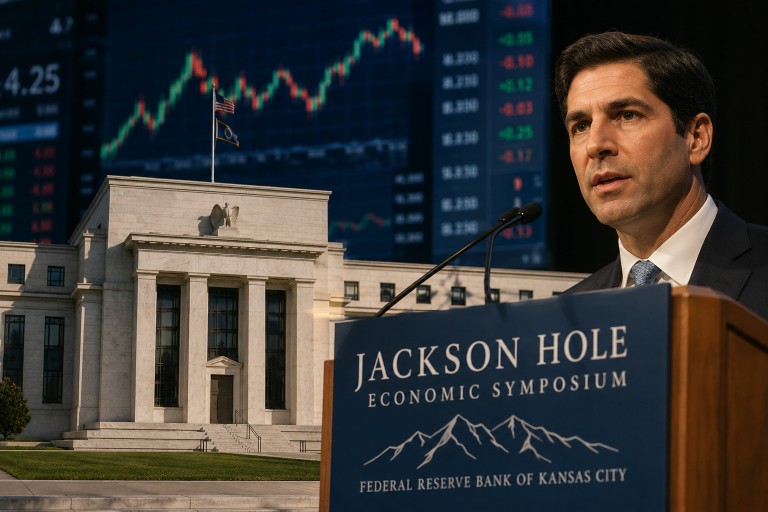
As anticipation builds for US Federal Reserve Chair Kevin Warsh’s speech at the Jackson Hole symposium, investors are eager for insights on interest rates, inflation, and the impact of rising Treasury yields on monetary policy. Warsh’s recent shift away from detailed forward guidance has prompted market participants to rely more heavily on market signals, creating uncertainty about how the Fed plans to tackle inflation, which continues to exceed its 2% target.
The increasing long-term Treasury yields have added complexity to the economic outlook. Some investors argue that these higher yields are effectively tightening financial conditions, which might diminish the necessity for additional interest rate hikes. The situation gained further attention after the US Treasury decided to ramp up its buybacks of long-dated bonds in response to a recent sell-off. Although officials maintain that this strategy aims to bolster market liquidity, investors see it as an attempt to alleviate pressure on long-term borrowing costs.
Market participants are now looking for a stronger commitment from Warsh regarding the Federal Reserve’s strategy to reduce inflation to its 2% target. They are also keen to understand whether further rate increases might be necessary in the current financial climate.
As Warsh prepares to address the Jackson Hole gathering, the financial community will be closely analyzing his remarks for any indications on the future trajectory of US monetary policy. The relationship between bond market conditions and the Federal Reserve’s decisions remains a key area of interest as investors speculate on the Fed’s next moves.