
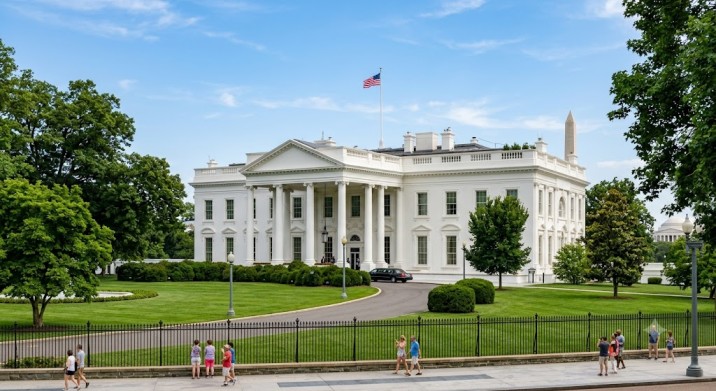
Following Argentina’s victory over England in the World Cup semi-final, the White House has come to the defense of the Argentine national football team after players displayed a banner advocating for Argentina’s claim to the Falkland Islands. Andrew Giuliani, who leads the White House FIFA taskforce, emphasized the United States’ commitment to freedom of expression. In contrast, British officials expressed disapproval and urged FIFA to investigate whether the banner contravened regulations prohibiting political statements in football.
The incident has reignited the longstanding debate over the sovereignty of the Falkland Islands. The government of the Falkland Islands has labeled the display as inappropriate and has called on FIFA to enforce its policy of keeping politics separate from sports. This request echoes a broader international concern that sporting events should remain free of political influences.
FIFA has acknowledged the situation and confirmed that it is currently examining the incident through its disciplinary channels. The organization is tasked with determining whether any rules were violated, particularly those related to political messages, which are typically prohibited in the realm of international football competition.
The display of the banner has stirred emotions tied to a historical dispute that has seen Argentina and the United Kingdom at odds for many years. This latest development underscores the sensitivity surrounding the issue, as both nations maintain their respective claims to the islands, which have been under British control since 1833.
As FIFA scrutinizes the actions of the Argentine players, the broader conversation about the intersection of sports and politics remains in the spotlight. The incident serves as a reminder of the complex dynamics that can arise when national pride and political issues intersect on an international stage.