
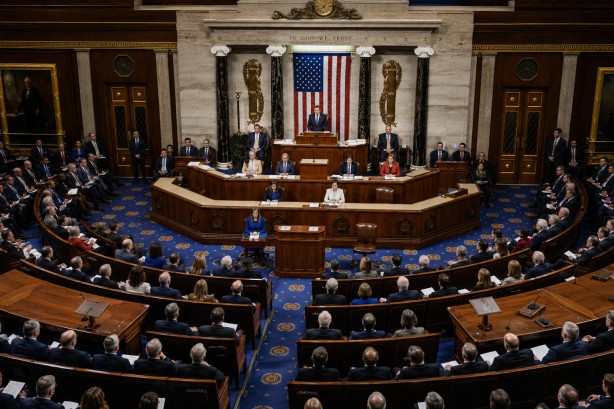
The U.S. House of Representatives has narrowly passed a $1.15 trillion National Defense Authorization Act (NDAA), marking a significant step forward for military spending amid heated debates on various policy issues. Passed by a 216-212 vote, the bill now heads to the Senate for further deliberation. This defense package promises a 5% to 7% pay increase for military personnel and allocates substantial investments to bolster the nation’s armed forces.
Republican leaders advocated for the legislation, emphasizing its importance in modernizing the military and enhancing national security. In contrast, most Democrats opposed the bill, criticizing the hefty defense expenditure while other domestic programs face cuts. The bill’s progress has been further complicated by disagreements over President Donald Trump’s recent military actions in Iran, which were conducted without prior congressional approval, raising concerns about expanding U.S. involvement in the Middle East.
Additionally, the inclusion of voting-related provisions has been a contentious issue. Backed by Trump, these provisions propose stricter voter ID requirements and limitations on mail-in voting, which Democrats argue should not be interwoven with defense legislation. This aspect of the bill has fueled broader debates about the appropriateness of combining unrelated policy measures within defense funding.
During the House debate, an amendment seeking to terminate U.S. military aid to Ukraine was rejected, while discussions on amendments concerning transgender military policies and defense healthcare were notably fervent. These debates underscore the complex political dynamics at play in advancing the NDAA.
In another development, House Republicans also approved a budget framework authorizing $73 billion for military operations involving Iran. However, this amount falls short of the Pentagon’s broader defense funding requests, illustrating the ongoing negotiations and compromises shaping U.S. defense policy.