
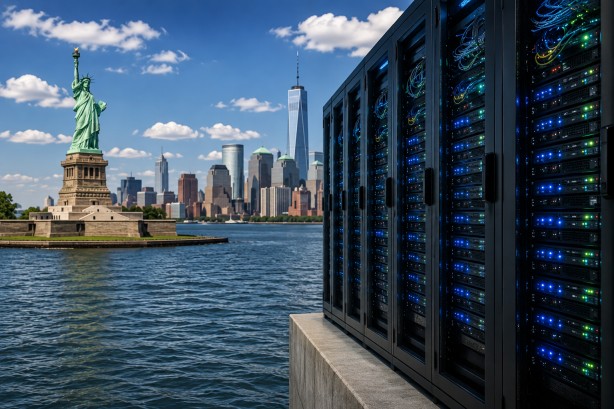
In a landmark decision, New York has become the first state in the United States to enforce a temporary halt on the development of new large-scale data centers designed for artificial intelligence systems. Governor Kathy Hochul has enacted an executive order suspending the state’s permitting process for new “hyperscale” data centers that require an electrical capacity exceeding 50 megawatts. This moratorium, set to last for up to a year, is intended to allow state regulators to devise more stringent standards addressing energy consumption, water usage, and environmental protection, while also considering the impact on local communities.
The state’s decision comes amid rising concerns about the potential escalation of energy costs, environmental degradation, and the strain on natural resources, especially water supplies. Governor Hochul highlighted the necessity of this pause, noting that without action, the rapid expansion of data centers could lead to increased utility bills and pressure on energy infrastructure. The moratorium provides a window for developing a comprehensive regulatory framework that aims to mitigate these issues.
As part of the regulatory considerations, New York is exploring measures that would mandate large data centers to either produce their own energy or incur higher energy costs. This strategy is designed to prevent the financial burden from being transferred to residents. The move reflects a broader national trend, as several states across the U.S. are contemplating restrictions on new data center projects due to fears of rising electricity prices, environmental harm, and land use conflicts.
Governor Hochul has stressed the importance of building future data centers in communities that are supportive of such projects. Compliance with local zoning rules remains essential, and the state is committed to ensuring that communities hosting significant facilities benefit economically. This initiative is part of New York’s ongoing efforts to regulate AI infrastructure, accompanied by legislative discussions aimed at enhancing transparency, energy efficiency, and environmental safeguards.