
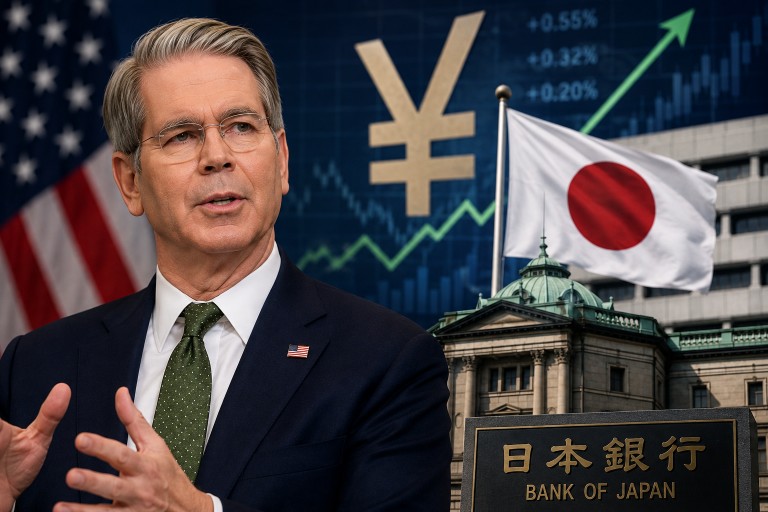
In a recent development, U.S. Treasury Secretary Scott Bessent has affirmed his strong backing for Japan’s initiatives to bolster the yen, aligning with market sentiments that the Bank of Japan (BOJ) might consider an interest rate hike during its upcoming policy meeting on September 17-18. This statement was made during Bessent’s meeting with BOJ Governor Kazuo Ueda at the G20 finance ministers and central bank governors’ summit in Asheville, North Carolina. Bessent highlighted that the yen’s depreciation is contributing to inflationary pressures, emphasizing the necessity for sound monetary policies and transparent communication to stabilize inflation expectations and curb excessive currency fluctuations.
With the BOJ’s previous rate hike in June, market analysts are increasingly factoring in the possibility of another increase this September, which could signal a shift towards a more aggressive monetary tightening approach. This anticipation has already influenced Japan’s financial landscape, as evidenced by the country’s 10-year government bond yield surpassing 3% for the first time since 1996. This rise in yields reflects expectations of tighter monetary policies and presents concerns regarding Japan’s fiscal stability.
The prospect of rising interest rates is also escalating borrowing costs across Japan. The Finance Ministry has projected that if these elevated borrowing costs persist, the government’s debt-servicing obligations could rise substantially in the years to come. Alongside these fiscal challenges, Japanese households are beginning to feel the impact through increased mortgage expenses, especially for those with fixed-rate loans.
However, the situation is not without its advantages. Higher interest rates are yielding positive returns for savers and financial institutions, improving the outcomes on deposits and long-term investments. This creates a complex scenario for the BOJ, which must delicately balance its efforts to support the yen and control inflation without exerting undue pressure on households, businesses, and the broader governmental fiscal framework.