
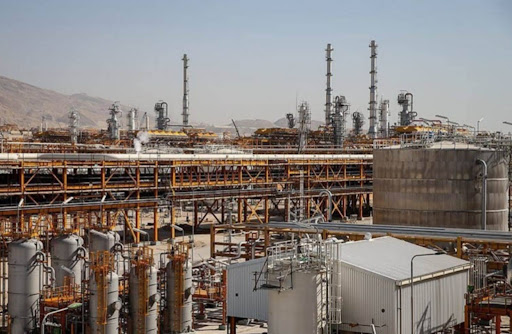
Iran’s Revolutionary Guards targeted Gulf refineries with imminent strike threats on Wednesday after Israeli forces hit the South Pars gasfield in the most significant energy escalation of the conflict to date. Facilities in Saudi Arabia, the UAE, and Qatar were named and their workers ordered to evacuate. Oil prices surged toward $110 a barrel as the threat of a full-scale Gulf energy infrastructure war became real.
South Pars is the world’s largest natural gas reserve and is shared between Iran and Qatar. The Israeli strike — reportedly carried out with US authorization — was the first direct attack on Iran’s fossil fuel production since the war began. Both Washington and Tel Aviv had previously held back from targeting Iranian energy assets, calculating that doing so risked destabilizing global energy markets and triggering exactly the kind of sweeping retaliation now unfolding.
Iran’s state media named Saudi Arabia’s Samref refinery and Jubail complex, the UAE’s al-Hosn gasfield, and Qatar’s Mesaieed and Ras Laffan facilities as targets for strikes in the coming hours. Evacuation orders were broadcast publicly and urgently. The governor of Iran’s Asaluyeh province called the US-Israeli attack “political suicide” and declared the war had moved into a full-scale economic phase.
Oil climbed to $108.60 a barrel on the news, while European gas benchmarks jumped more than 7.5%. Gulf oil exports had already fallen 60% from pre-war levels, battered by infrastructure damage and Iran’s Strait of Hormuz blockade. Iran had continued shipping its own crude through the strait unimpeded while choking off its neighbors’ exports — a strategic imbalance that had persisted throughout the conflict.
Qatar’s government spokesperson Majid al-Ansari warned that attacking energy infrastructure threatened global energy security and the welfare of regional populations. With the world watching and oil markets on edge, Iran’s retaliatory window was open and specific targets named. The energy conflict had reached a moment of maximum danger — one with the potential to reshape global energy supply and pricing for years to come.